In This Article
What is Graduated Compression?
How Does Compression Work?
Which Compression Level Is Right for Me?
🌟 15-20 mmHg: Class 1 Mild Compression
🧸 23-32 mmHg: Class 2 Moderate Compression
🩺 34-46 mmHg: Class 3 Strong Compression
🏥 Over 49 mmHg: Class 4 Very Strong Compression for Hospital Use
Pregnancy can bring swelling, heaviness, aching, and visible veins — all completely normal, but often uncomfortable. Graduated compression socks and stockings are one of the simplest, safest ways to ease these symptoms and support healthy circulation. Before choosing the right compression level, it helps to understand what graduated compression actually is and why it's so commonly recommended during pregnancy and postpartum.
What is Graduated Compression?
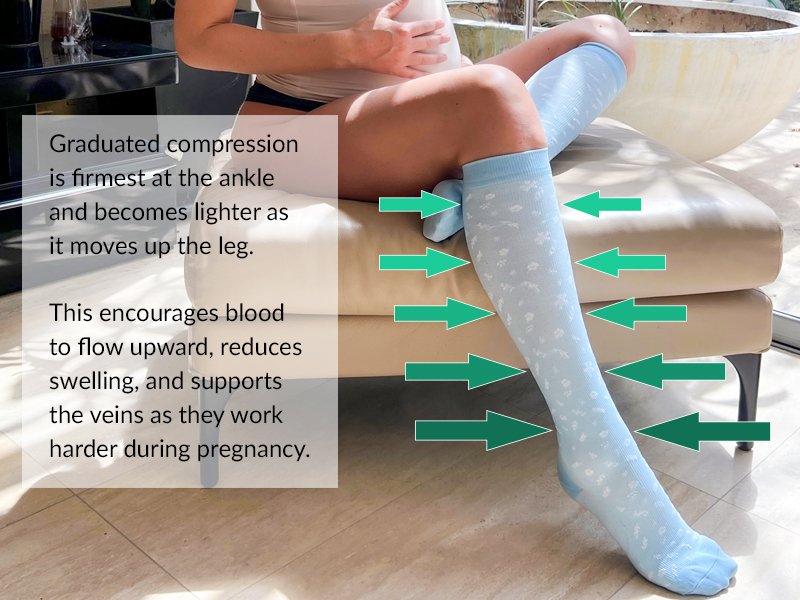
Graduated compression refers to specially designed socks or stockings that apply the firmest pressure at the ankle, with the pressure gradually easing as it moves up the leg. This pressure gradient helps reduce swelling, support circulation, and relieve that heavy leg feeling many mums experience. Graduated compression comes in different levels and styles, allowing you to choose the option that best matches your symptoms and daily needs.
How Does Compression Work?
Graduated compression supports your circulation by using firm pressure at the ankle that becomes lighter up the leg. This helps push blood back toward your heart, reduces fluid pooling, and supports your veins as they work harder during pregnancy. When worn correctly, compression should feel snug and supportive — never painful, restrictive, or uncomfortable.
Understanding Compression Levels
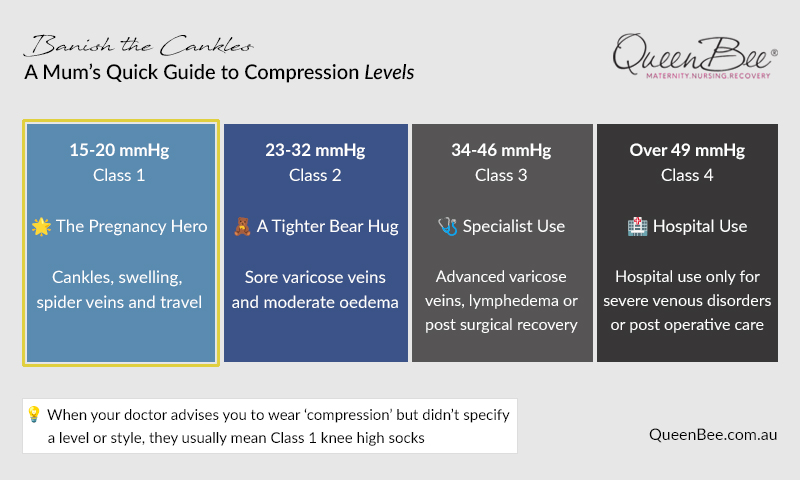
Compression is measured in millimetres of mercury (mmHg) — the same unit used for blood pressure. Higher numbers mean stronger compression.
- 15-20 mmHg - Class 1 mild compression
- 23-32 mmHg - Class 2 moderate compression
- 34-46 mmHg - Class 3 strong compression
- over 49 mmHg - Class 4 very strong compression for hospital use
If your doctor recommends compression but doesn't specify a level, they are usually referring to Class 1.
Which Compression Level Is Right for Me?
Below is a guide to help you understand each level and when it may be most helpful.
15-20 mmHg: Class 1 Mild Compression
🌟 The Pregnancy Hero
This is the most commonly recommended level for pregnancy and postpartum. If you're experiencing moderate swelling in your ankles and calves, spider veins, or that nagging ache from hormonal changes and weight gain, this level offers gentle yet effective relief.
It helps by promoting better blood flow, reducing fluid buildup, and alleviating pain from varicose veins that often flare up in the second and third trimesters. Postpartum, it supports recovery from delivery-related swelling, making it easier to chase after your newborn. Expect to feel lighter on your feet, with less fatigue and quicker recovery after activity — many mums report sleeping better too!
Benefits:
- Helps relieve tired, achy, or heavy legs
- Helps reduce minor to moderate swelling of the feet, ankles, and legs
- Improves blood flow and reduces blood pooling
- Helps prevent and relieve minor to moderate varicose veins and spider veins
- Helps reduce the risk of DVT (deep vein thrombosis), especially during long travel
- Supports circulation during long periods of standing or sitting
- Helps manage pregnancy-related swelling and discomfort
Best for:
Daily pregnancy wear, postpartum recovery, long flights, long work shifts, mild varicose veins.
| 💡 This is the most common compression level to wear during pregnancy and is the ideal level for travelling ✈️ |
23-32 mmHg: Class 2 Moderate Compression
🧸 A Tighter Bear Hug
Class 2 offers firmer support for more noticeable symptoms such as significant swelling, painful varicose veins, or chronic leg fatigue. It's often recommended when Class 1 isn't enough or when there's a history of venous issues.
The benefits are amplified: it more effectively reduces deep aches, prevents worsening of conditions like oedema or thrombosis risks (common in pregnancy), and speeds up postpartum healing by minimising inflammation. You'll notice improved mobility, less throbbing pain after standing, and overall comfort that lets you enjoy this special time more fully. Always check with your doctor before moving to Class 2.
Benefits:
- Helps relieve tired, achy, and heavy legs
- Helps treat moderate to severe swelling (oedema), including swollen feet and ankles
- Improves blood flow and supports venous return
- Helps prevent and relieve moderate to severe varicose veins
- Helps slow the progression of varicose veins, spider veins, and DVT
- Provides stronger support for those on their feet for long, strenuous shifts
- Helps manage postpartum swelling, especially after C-section or long labour
Best for:
Postpartum recovery, moderate varicose veins, significant swelling, nurses, teachers, retail workers, and anyone on their feet all day.
| 💡 Class 2 is recommended by your doctor when Class 1 no longer offers relief or for more serious venous conditions |
34-46 mmHg: Class 3 Strong Compression
🩺 Specialist Use
Class 3 is reserved for serious venous conditions such as advanced varicose veins, lymphedema, or post-surgical recovery. It is only used under direct medical guidance and is not something you would typically need during pregnancy or postpartum. If your doctor feels you need this level of support, they will prescribe it and guide you through its use.
Over 49 mmHg: Class 4 Very Strong Compression for Hospital Use
🏥 Hospital Use
Class 4 is used in clinical settings for severe venous disorders and is administered under strict medical supervision. It is not available for general purchase and is not relevant to pregnancy or postpartum compression needs.
Confidence in Your Choice
Finding the right compression level can make a meaningful difference in how your legs feel throughout pregnancy and postpartum. Whether you're dealing with mild swelling, long workdays, or more noticeable vein symptoms, there's a level of support designed to help you stay comfortable, active, and confident. Most mums start with Class 1, while Class 2 offers extra relief when symptoms increase or during postpartum recovery. With the right fit and the right level, compression becomes a simple, supportive tool you can rely on as your body changes and heals.
Once you know your level, our Compression Styles Guide helps you match it to the right sock or stocking for your symptoms. And if you still have questions, our Pregnancy Compression FAQ covers everything from travel and safety to postpartum recovery.
Ready to shop? Browse our full range of Pregnancy & Postpartum Compression to find the right level for you.