Maternity Compression
At first your shoes feel a little tighter. Then your legs start feeling heavy and achy. Then comes the swelling and puffiness. So your doctor recommends compression — but doesn’t always explain what that actually means.
You’re left wondering: What’s mmHg? Do I need Class 1 or Class 2? And what’s the difference between knee‑high and thigh‑high styles?
Here’s a clear, simple guide to what’s happening in your body and how compression can help you feel better.
Why does swelling happen in pregnancy?
Pregnancy dramatically increases your blood volume, and hormones relax your vein walls. Combined with extra weight and long periods of sitting or standing, blood and fluid can pool in your lower legs and feet.
This is why so many mums experience swollen ankles, heavy legs and that “my ankles have disappeared” feeling.
What about varicose veins?
Varicose and spider veins are very common in pregnancy. They occur when the one‑way valves in your veins weaken under increased blood volume, hormonal changes and pressure from your growing baby.
Compression helps support these veins and improves blood flow.
What are the benefits of compression during pregnancy and postpartum?
Graduated compression can help:
- Reduce swelling: Minimises fluid build-up in your feet, ankles, and legs.
- Ease heaviness: Relieves aching, tired, and heavy lower legs.
- Boost circulation: Improves blood flow during long days of sitting or standing.
- Support veins: Calms the discomfort associated with varicose and spider veins.
- Travel safely: Lowers the risk of blood pooling and clots during flights or long drives.
- Aid recovery: Supports a smoother postpartum healing journey, including after a C‑section.
How does graduated compression work?
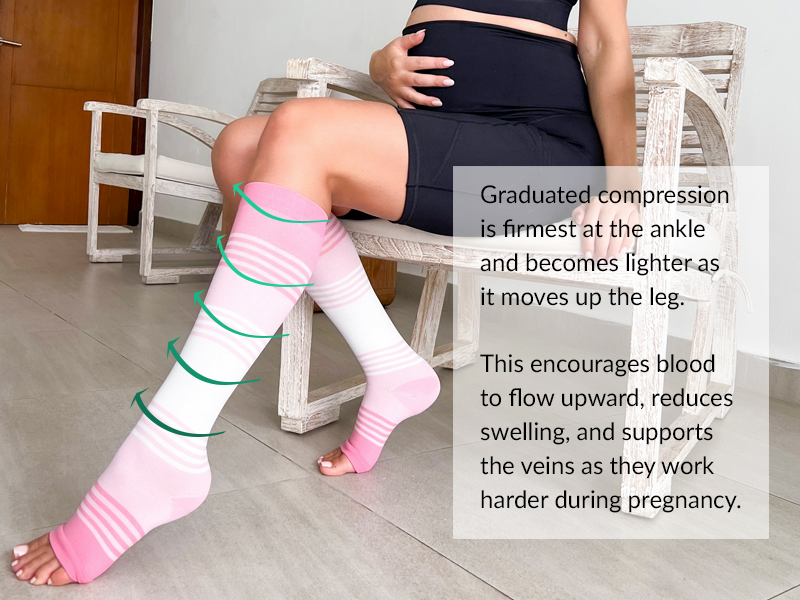
Graduated compression applies the firmest pressure at the ankle and gradually decreases as it moves up the leg. This gentle action helps push blood back toward your heart, reduces fluid buildup and supports your veins — counteracting the effects of gravity.
Graduated compression is one of the most well-established and widely recommended approaches to supporting circulation during pregnancy.
Which compression level do I need?
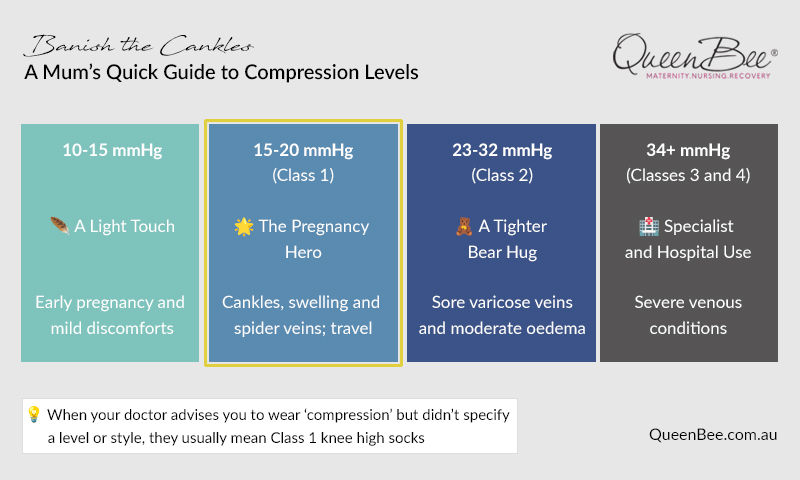
Compression is measured in mmHg (millimeters of mercury). Here’s a simple breakdown:
- 15–20 mmHg (Class 1): Mild compression and the most common level for standard pregnancy support.
- 23–32 mmHg (Class 2)): Moderate, medical-grade compression for significant swelling or severe varicose veins.
- 34–46 mmHg (Class 3): Strong compression typically reserved for specialist prescriptions.
- Over 49 mmHg (Class 4): Very strong compression designed strictly for hospital use.
Most women start with Class 1. Your doctor may recommend Class 2 if you need stronger support.
Should I choose knee‑highs or thigh‑highs?
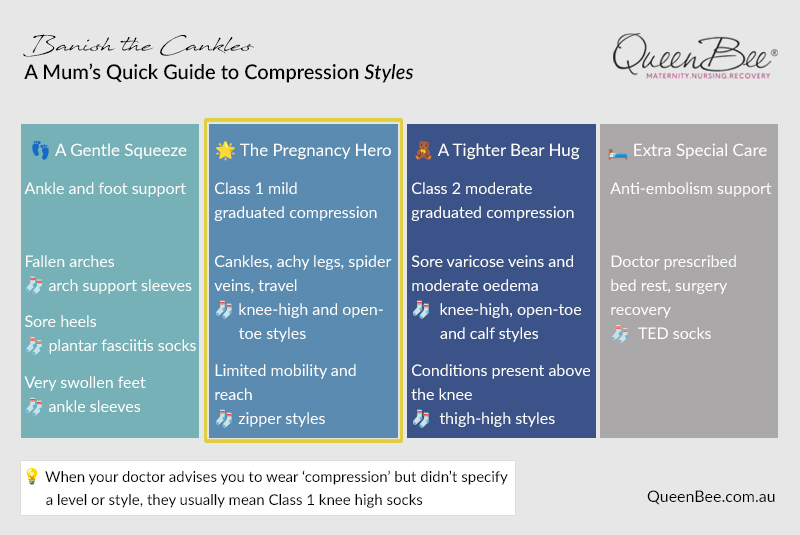
It all depends on where you are experiencing your symptoms:
- Knee-highs: The best choice for everyday ankle, foot, and calf swelling.
- Thigh-highs): Ideal when swelling, discomfort, or varicose veins extend above the knee.
- Open-toe: Perfect for warm weather, breathing room, and managing swollen toes.
Still not sure?
If you’re still unsure, that’s okay — compression comes with a lot of medical jargon. Our Compression FAQ helps you break down your options further so you can choose the support that feels exactly right for your body.