In This Article
🌿 1. Understanding Graduated Compression
✨ 2. Choosing the Right Compression Level
🌸 3. Choosing the Right Style
🌼 4. When & How to Wear Compression
✈️ 5. Travel, Work & Daily Life
🧩 6. Fit, Comfort & Troubleshooting
🧺 7. Washing, Care & Longevity
🩺 8. Safety & When to Seek Advice
🤱 9. Postpartum Questions
Pregnancy brings big changes to your circulation — increased blood volume, relaxed vein walls, and extra pressure on your lower body. Swelling, heaviness, aching legs, and varicose veins are very common, but you don’t have to just put up with them. Graduated compression is one of the safest and most effective ways to find relief.
This FAQ answers the questions we’re asked most often. You’ll also find our Compression Levels Guide and Compression Styles Guide helpful for choosing the right products.
💡 Quick Visual Guides
→ 📊 Compression Levels at a Glance – Class 1 vs Class 2 explained simply
→ 👟 Compression Styles at a Glance – Match your symptoms to the right style
🌿 1. Understanding Graduated Compression
Graduated compression supports your circulation by applying the firmest pressure at the ankle and gradually easing up the leg. This helps reduce swelling, support vein function, and ease that heavy leg feeling many women experience during pregnancy.
What is graduated compression?
It applies the firmest pressure at the ankle and gradually decreases up the leg. This helps push blood back toward your heart, reduces fluid buildup, and eases swelling and heaviness.
What’s the difference between support stockings and medical compression stockings?
Support stockings give even pressure. Medical compression uses graduated pressure, which is far more effective for pregnancy swelling and circulation.
How does compression help during pregnancy?
It can reduce swelling, ease leg fatigue and aching, improve circulation, and help prevent or minimise varicose veins and blood clots.
Can compression make swelling worse?
No — properly fitted compression should not worsen swelling. If swelling increases or is only in one leg, contact your doctor.
Can compression help prevent swelling in pregnancy?
Yes — it helps reduce fluid build up in the legs and ankles.
Can compression help prevent varicose veins?
Yes — it supports vein function and reduces the risk of them developing or getting worse.
Do compression socks help with leg cramps?
Many women find they reduce cramping and restless legs by improving circulation.
| ⭐ Compression should feel snug and supportive — never painful or restrictive. |
✨ 2. Choosing the Right Compression Level
Compression levels describe how much pressure the garment applies. Choosing the right level helps you get relief without feeling restricted.
What does compression level mean?
It refers to the amount of pressure applied to your legs, measured in mmHg. Higher numbers mean stronger support.
Why are compression levels important during pregnancy?
Different levels support circulation in different ways. Choosing the right one helps reduce swelling and discomfort without being too tight.
How do I know which compression level is right for me?
Most pregnancy related swelling responds well to Class 1 (15–20 mmHg). If symptoms are more pronounced or your doctor recommends stronger support, Class 2 (23–32 mmHg) may be appropriate. See our Compression Levels Guide for more detail.
Do I need a prescription for compression socks?
Not for Class 1 or Class 2. Higher levels (Class 3+) require medical supervision.
Can I start with Class 2 instead of Class 1?
Most women start with Class 1 because it’s gentle and effective. However, if your swelling is already significant, check with your doctor first before starting Class 2.
How can I tell if my compression socks are too tight?
Remove them immediately if you feel numbness, pins and needles, cold feet, colour changes, or rhythmic throbbing.
What if swelling is only in one leg?
Seek medical advice promptly — one-sided swelling can be a sign of DVT.
| ⭐ Compression levels describe pressure, not tightness — the right fit should always feel comfortable. |
🌸 3. Choosing the Right Style
Compression styles vary based on where swelling appears and what feels most comfortable. This section helps you match your symptoms to the right style.
Do I need a specific compression style during pregnancy?
Not necessarily — the best style depends on where you experience swelling and what feels comfortable. See our Compression Styles Guide for a full breakdown.
Are open-toe styles as effective as closed-toe styles?
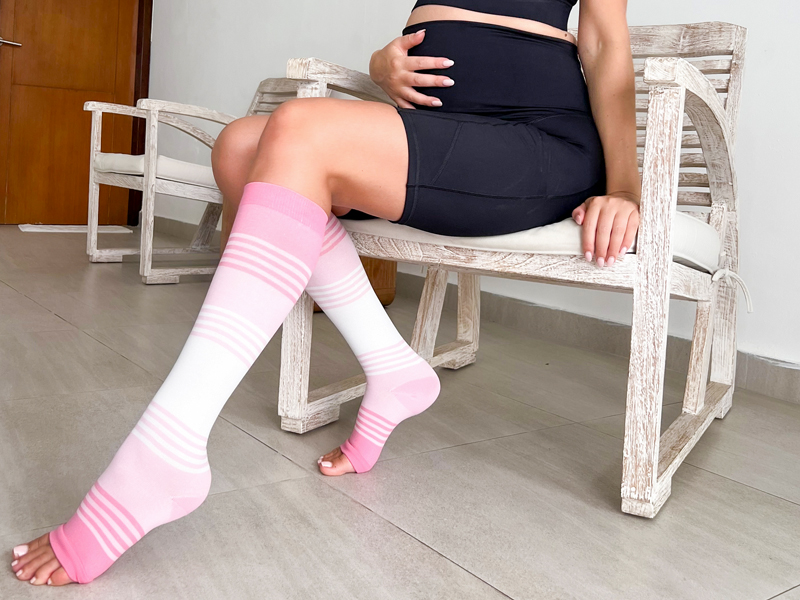
Yes. The compression starts at the ankle, so both styles work the same. Open toe options are great for warm weather, toe sensitivity, or sandals.
When should I choose thigh high compression instead of knee high?
Choose thigh highs if swelling or varicose veins extend above the knee or if you need full leg support postpartum.
Do ankle sleeves or arch support styles help with foot specific issues?
Yes — ankle sleeves help with puffy feet and ankles, while arch support or plantar fasciitis socks can ease mild foot discomfort.
How do I choose the best style for my pregnancy symptoms?
Match the style to your symptoms:
• Knee-highs for lower leg swelling
• Thigh-highs for symptoms above the knee
• Open-toe for breathability or swollen toes
• Zip styles for easier wear in late pregnancy
• Ankle styles for foot-only swelling
What’s the most popular style for pregnant women?
Class 1 knee high socks — they’re easy to wear and target the lower leg, where swelling and those 'disappearing ankles' usually start.
Are TED socks suitable for travel?
No. TED socks are designed for immobility (bed rest, surgery recovery), not for sitting upright, standing, or walking. For travel, Class 1 knee high compression socks are the safest and most effective option.
| ⭐ TED is for BED — not for travel or everyday pregnancy swelling. |
🌼 4. When & How to Wear Compression
Knowing when to wear compression can make a big difference in how your legs feel.
How does compression feel?
Snug, firm, and supportive — especially around the ankle. It should never feel painful or restrictive.
Can I feel the improved blood flow?
Yes, many mums do! When compression is working well, your legs often feel noticeably lighter, less heavy and achy. Some women with cold feet notice they feel warmer. Many say they only really notice the difference when they take the socks off — their legs feel more tired and swollen again.
When should I put my compression socks on?
First thing in the morning, before swelling starts. For travel or long days on your feet, put them on before leaving the house.
When should I wear compression socks during pregnancy?
Anytime you’re standing, sitting for long periods, or travelling. Swelling commonly starts in the second trimester, for some women it begins earlier especially from your second child onwards. In the third trimester your baby puts increasing pressure on the veins in your pelvis, which slows blood flow from your legs back to your heart. Combined with your body holding onto more fluid, this makes the third trimester the most common time for noticeable swelling in the feet and ankles.
Can I wear compression socks in summer or hot weather?
Yes — and if you're dealing with pregnancy swelling in the heat, compression is actually more important, not less. Heat causes blood vessels to dilate, which can make swelling and heaviness significantly worse. The good news is there are styles designed specifically for warm weather. Open-toe knee-highs allow your toes to breathe freely, footless styles keep your feet completely unrestricted, and lighter fabrics help manage temperature without sacrificing support. If you find compression feels too warm, switching to an open-toe or footless style is usually all it takes. Staying well hydrated and putting your socks on first thing in the morning before the heat builds also makes a big difference.
| ⭐ Don't skip compression on hot days — that's often when swelling is at its worst. |
Do I need to wear compression every day?
Not necessarily — many women wear them on days with more standing, sitting, or swelling.
Can I take compression socks off during the day?
Yes — you can remove them anytime.
Can I wear compression socks all day?
Yes — most people wear them during waking hours and remove them before bed unless advised otherwise.
Can I wear compression socks overnight?
Generally no. Compression is designed for daytime use when you're upright and gravity is working against you. At night, lying down, your body doesn't need the same support, and your veins benefit from a break.
| ⭐ Snug is normal. Numbness is not. |
✈️ 5. Travel, Work & Daily Life
Travel and long periods of sitting or standing can worsen swelling. Compression helps keep blood flowing and reduces discomfort.
Can compression stockings help when flying while pregnant?
Yes — they support circulation and reduce swelling during long flights.
Should I wear compression socks when travelling during pregnancy?
Yes. They help maintain healthy blood flow and reduce the increased risk of DVT during long periods of sitting.
Do I need compression for short flights or only long ones?
Helpful for any flight, but especially those longer than 3–4 hours.
Can compression socks reduce the risk of DVT when travelling?
They support circulation during long periods of sitting, which helps reduce DVT risk.
Should I wear compression socks for car travel too?
Yes — long car trips can cause just as much swelling as flights.
When should I put my compression socks on before travelling?
First thing in the morning or before leaving for the airport or car trip.
Can I wear compression at the gym or during exercise?
Yes — compression can support circulation during low impact exercise like walking or prenatal classes.
| ⭐ Put your compression socks on before you leave — prevention works better than trying to reduce swelling later. |
🧩 6. Fit, Comfort & Troubleshooting
Good fit is essential for comfort and effectiveness.
How do I find the right size?
Generally you will need to know your ankle, calf, thigh circumference (depending on the garment type) and sometimes your height and weight. Higher grades of gradient compression may require additional measurements. Once you have your measurements refer to the sizing chart on each product page for brand-specific measurements.
Why do my compression socks roll down?
This usually means the size or style isn’t right. A different size or a shorter length often solves the issue.
What if the top band feels tight?
A slight indent is normal, but deep marks or discomfort mean the band may be too tight. Try a different size or a softer top band.
| ⭐ Measure in the morning before any swelling occurs for the most accurate fit. |
🧺 7. Washing, Care & Longevity
Proper care helps your compression socks stay effective and comfortable.
How long do compression socks last?
Typically 3–6 months, depending on wear and washing.
How often should I wash them?
After each wear to maintain elasticity and hygiene.
How do I wash them?
Hand wash or use a gentle machine cycle. Never use a dryer — heat damages the elastic fibres. Dry flat in the shade.
How many pairs do I need?
Two to three pairs make it easier to rotate while washing.
| ⭐ Compression socks are foundation garments — proper rotation helps them last longer. |
🩺 8. Safety & When to Seek Advice
Compression is safe for most pregnant and postpartum women, but there are times when medical advice is important.
Is compression safe during pregnancy?
Yes — for most women. If you have arterial circulation issues, reduced sensation, active skin conditions, heart conditions, or a recent DVT, speak with your doctor first.
Are there people who shouldn’t wear compression?
Yes — those with arterial disease, severe neuropathy, active skin infections, or untreated heart conditions should seek medical advice first.
When should I stop wearing compression?
You can stop anytime your symptoms improve. Some women wear compression only during pregnancy, while others continue postpartum or during travel.
What if swelling is only in one leg?
Seek medical advice immediately — this can be a sign of DVT.
What are the signs of DVT I should watch for?
Swelling in only one leg, pain or tenderness (often in the calf), warm skin, redness or discoloration. If you experience any of these, seek medical attention immediately.
| ⭐ If your feet feel cold or change colour, remove the socks immediately. |
🤱 9. Postpartum Questions
Compression can be just as helpful after birth as it is during pregnancy.
Is postpartum swelling normal?
Yes — your body is clearing excess fluid from pregnancy, and IV fluids from labour or a C-section can add to swelling.
How long should I wear compression after giving birth?
Most women wear compression for 2–6 weeks postpartum, depending on symptoms.
Is compression helpful after a c-section?
Yes — it supports circulation during healing and reduces swelling in the legs and feet.
Can compression help with postpartum varicose veins?
Yes — compression supports vein function and may help symptoms settle more comfortably.
Can I wear compression while breastfeeding?
Absolutely. Long feeding sessions can increase swelling because you’re sitting still.
Is it safe to wear compression if I had stitches or tearing?
Yes — leg compression doesn’t affect perineal stitches or tearing.
Do I need a different compression level postpartum?
Most women continue with the same level they used during pregnancy.
| ⭐ Varicose veins often improve after birth, and compression can support that process. |
🌸 Conclusion
Graduated compression can make a meaningful difference to how your legs feel throughout pregnancy and postpartum — easing swelling, reducing heaviness, supporting circulation, and helping you stay comfortable through long days, travel, and recovery.
The right level and style depend on your symptoms, your daily routine, and what feels comfortable for your body. If you’re still unsure where to start, our Compression Levels Guide and Compression Styles Guide are great next steps.
Ready to shop? Browse our full range of Pregnancy & Postpartum Compression — and take care of those legs while you grow your beautiful baby. 💕